Knee
What Is Knee Osteoarthritis?
Knee osteoarthritis causes cartilage wear, pain, and stiffness. Exercise, physiotherapy, and strengthening can help, while surgery offers relief when symptoms progress.
Partial Replacement
Partial Knee Replacement
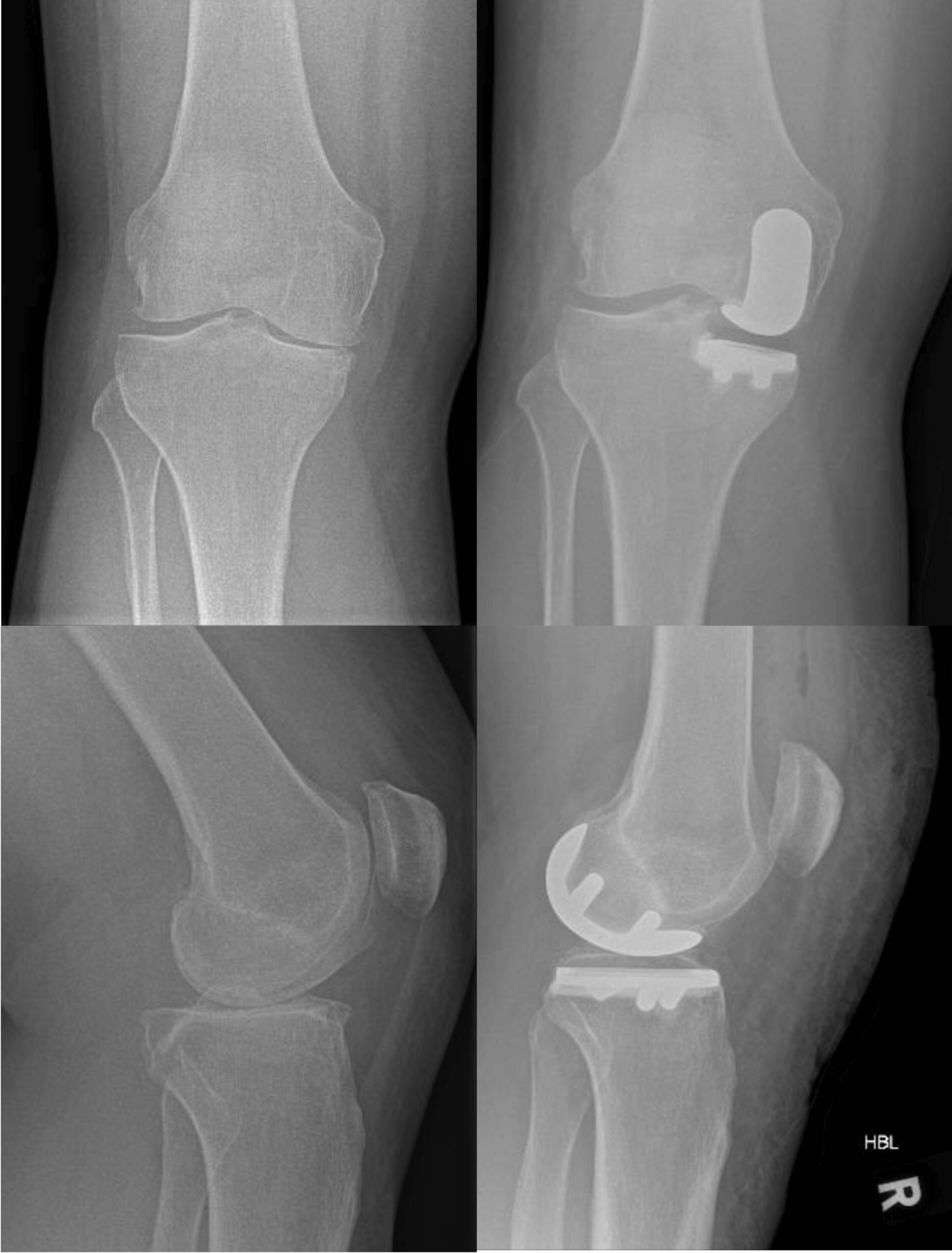
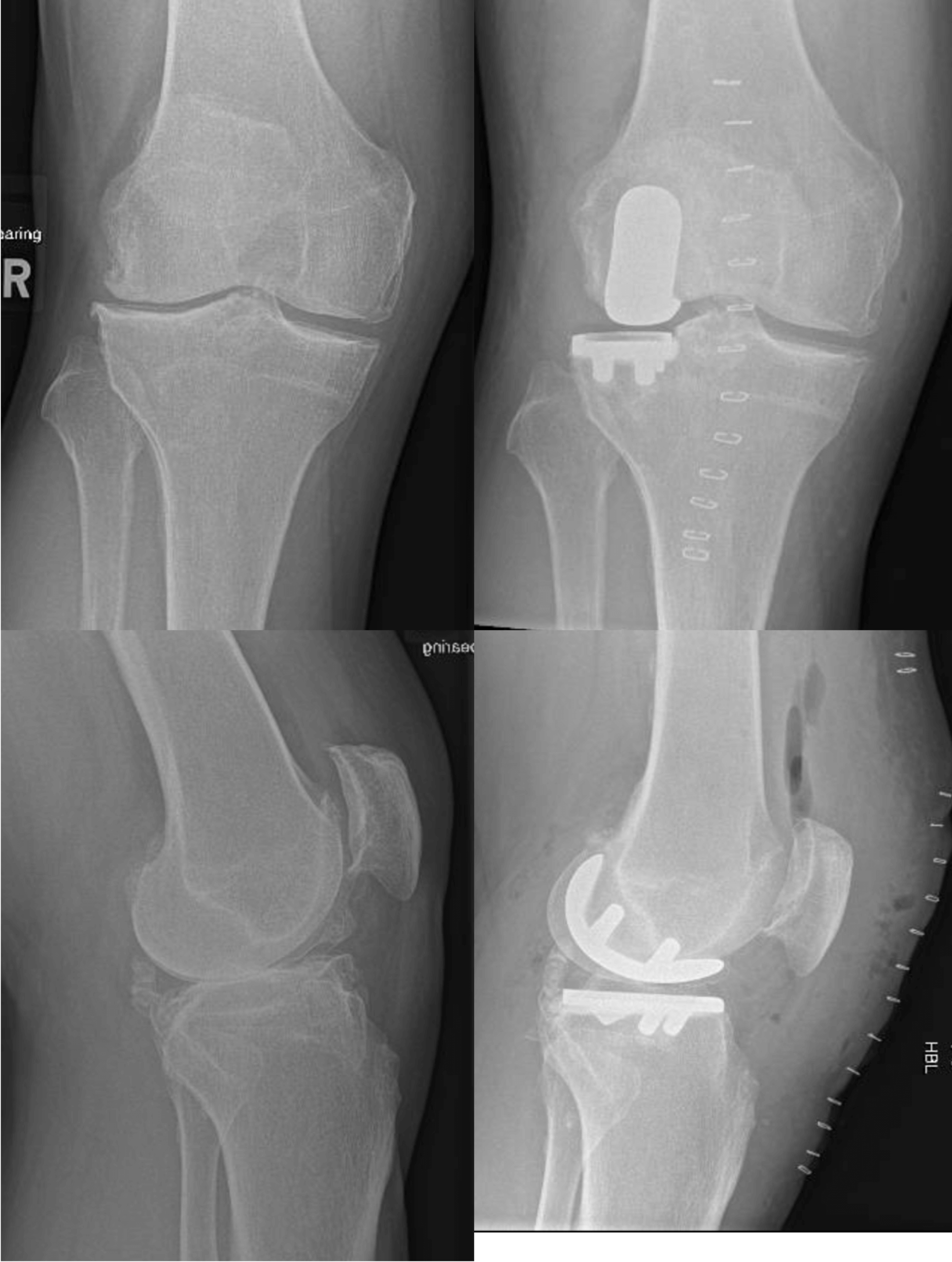
In almost half of patients with symptomatic knee arthritis who are considering joint replacement surgery, arthritis is limited to one section (compartment) of the knee.
When this is the case, a partial knee replacement, where only the involved compartment of the knee is replaced, can be considered instead of replacing the whole knee joint with a total knee replacement.
robotic-assisted
Precision Partial Knee Replacement
Robotic-assisted (Mako) partial knee replacement restores the knee as close to normal as possible. It’s a smaller operation than total knee replacement, offering faster recovery, lower risks, and more natural movement. Robotic precision has also reduced the need for future surgery.


Total Replacement
Total Knee Replacement
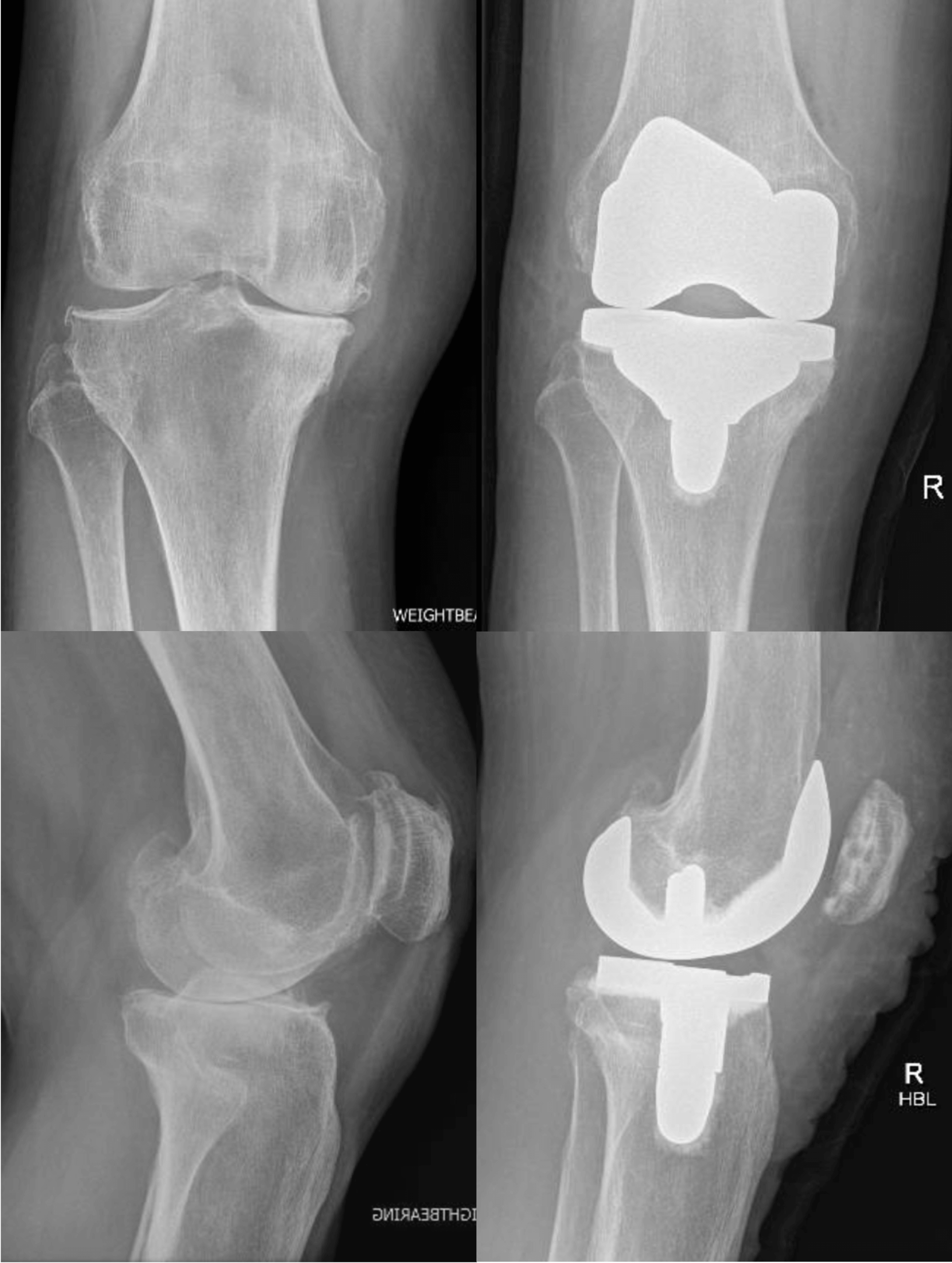
When multiple compartments of the knee are affected by arthritis a total knee replacement may be required. Total knee replacement is an excellent operation for getting rid of pain and improving quality of life, with 90% of patients satisfied with their outcome.
It does not, however, return the knee “back to normal” and it is unusual for a total knee replacement to be so good that you forget that you have had it done and it does not necessarily return the ability to perform complex knee activities like kneeling. If kneeling is an important part of your job or hobbies this should be considered.
procedure
Modern Approaches to Knee Replacement
Total knee replacement involves resurfacing the whole knee with metal (titanium or cobalt chrome) and plastic (highly crosslinked polyethylene) implants. It can be performed manually using jigs, or can be planned and delivered with the aid of robotic assisted (Mako) surgery. Modern knee replacements have excellent long term survival with fewer than one in five being redone by 25 years.